
Blog / Honda Seasonal Preparation

Seasonal Preparation: Winterizing Your Honda

Honda Winter Prep in Longview, WA - Stirling Honda

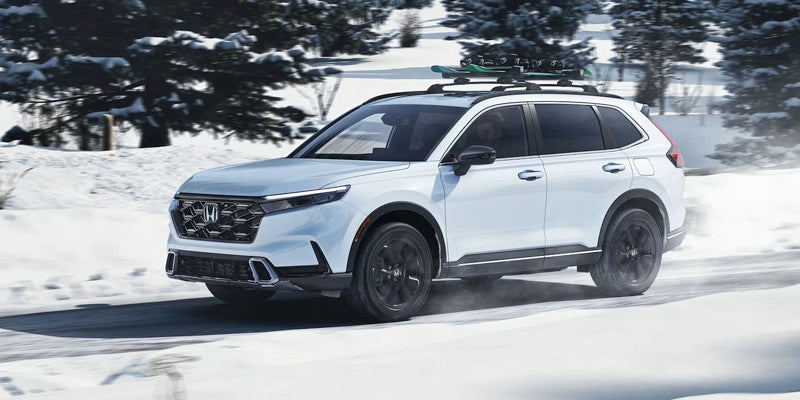
There are certain forms of maintenance you need to help your vehicle prepare for each season. When it comes to Honda winter prep, your focus should be on switching to winter tires, making sure the battery is working, and checking that wear and tear parts are in good enough condition to last throughout the cold months.

Fit Winter Tires 

Summer and all-season tires aren't made to withstand temperatures below the mid-40s, but winters tend to be in the mid-30s to mid-40s in Longview. You need to switch to winter tires instead, as these are made to remain supple enough to provide lots of traction in cold weather. Summer and all-season tires are made of a type of rubber that hardens and loses traction in winter.

You also need to think about the snow. Even though snowfall only tends to be in the 1 to 2-inch range, snow can make a big difference to how your car handles if you don't have the right tires. Winter tires are designed with deep tread and lots of sipes to help you cling to ice and easily drive through the snow.

Check Your Battery

As winter approaches, make sure you get your battery's health fully checked. Get a battery load test, get a voltage test, and have the acid levels in your battery checked. If there's anything wrong with your battery that could compromise its performance, then make sure you replace it before winter. It takes more power to get your vehicle started in winter, and a battery that's not in the best condition may not be able to handle the extra burden.

Inspect Your Belts and Hoses

Your belts and hoses should be inspected regularly for signs of wear and tear, such as cracking and fraying. They're even more susceptible to this wear and tear in winter, so if these components are worn out in any way, then it's best to replace them before winter hits. You don't want the cold to get to an already worn belt and make it snap or become loose.

Check Your Heater

Having a fully functional heater isn't just important for your comfort; you also need it for visibility. The heater and defroster need to be able to keep ice off the windows and stop them from fogging up so you can still see the road clearly during the winter months.

Change Your Oil

If you haven't gotten an oil change in a while, then do so before winter. Cold weather can thicken your oil and make it harder for it to cycle through your engine, compromising your engine's performance.

Looking for somewhere to get your car ready for winter? Stop by Stirling Honda in Longview, WA for the best care for your car.
Posted in:

Related Posts

Order Honda OEM Parts in Longview, WA - Stirling Honda

Benefits of Ordering Honda OEM Parts

When your Honda requires a replacement part, you can choose genuine OEM components or third-party aftermarket alternatives. Understanding the advantages of ordering Honda OEM parts helps protect your investment. Drivers seeking the best for their vehicles can rely on Stirling Honda in Longview, WA, to provide exact factory matches. Visit or contact our Parts Department today to learn more and secure the right components for your car. What OEM Actually Means OEM stands for Original Equipment Manufacturer. Honda OEM parts are the identical components used to build your vehicle on the factory floor. They are engineered to exact specifications to fit, function, and perform perfectly. Aftermarket parts are produced by outside companies attempting to replicate these specifications. Tolerances, materials, and quality control vary widely among these third-party manufacturers. Guaranteed Fit and Compatibility A major benefit of Honda OEM parts is the guaranteed fit. Every Honda model, including the Civic Sedan, CR-V, Accord, and Pilot, features components engineered to work together as a cohesive system. An OEM brake pad is calibrated for the specific rotor thickness and caliper design of your model. A poorly fitting aftermarket part can cause noise, uneven wear, and reduced stopping performance. Using genuine parts eliminates compatibility guesswork. Reliability and Longevity Manufacturers build Honda OEM parts with materials meeting strict durability standards. The part you install today will last as long as the original component. Aftermarket alternatives often use lower-grade materials to reduce production costs, resulting in shorter service life and frequent replacements. Choosing OEM parts proves more cost-effective over time. Protecting Your Warranty Using non-OEM parts for repairs can complicate claims if your vehicle remains under its factory warranty or a Honda Care protection plan. Genuine Honda OEM parts include a parts warranty for an additional layer of protection. This peace of mind proves highly valuable for major engine, transmission, and suspension components. Consistent Performance Engineers tune and test your Honda as a complete system. Sensors, filters, belts, and fluids interact closely. Honda OEM filters handle the exact flow rates and filtration requirements of your engine. Using a part that fails to meet these specifications can degrade engine performance, fuel efficiency, and emissions output. Order Genuine Honda Parts Today The benefits of ordering Honda OEM parts include precise fit, reliability, warranty protection, and consistent performance. Genuine Honda parts meet the original standards of your vehicle. Drivers in Longview, WA, can easily source genuine parts directly through our dealership. Our parts team at Stirling Honda is ready to help you find the correct OEM component for your specific model and year to keep your Honda running properly.

Honda Ridgeline RTL and Black Edition Trims in Longview, WA - Stirling Honda

2026 Honda Ridgeline RTL vs. Black Edition: Is the Upgrade Worth It?

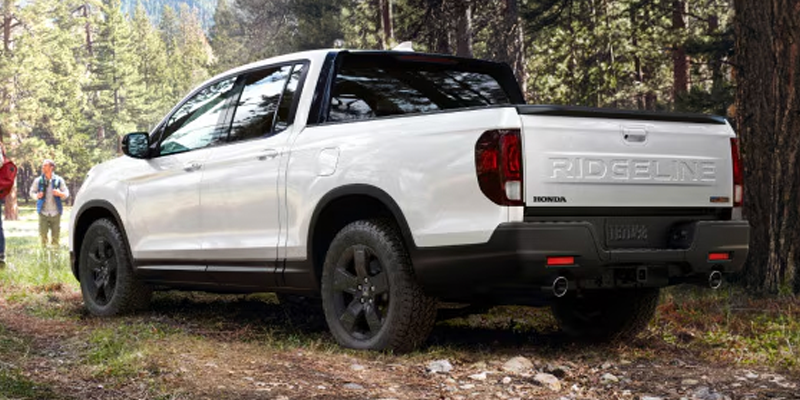
The 2026 Honda Ridgeline takes an unconventional route through the midsize truck market. Its independent rear suspension and SUV-like comfort make it particularly appealing for drivers who need a pickup without sacrificing everyday ride quality. At Stirling Honda in Longview, WA, the RTL and Black Edition present an appealing choice. Both deliver identical mechanical capability, but their equipment differences deserve a closer examination. RTL: A Well-Equipped Truck Without Excess The RTL already includes many features buyers expect from a premium pickup. Perforated leather-trimmed seating, heated front seats, and a one-touch power moonroof come standard. The driver receives 10-way power seat adjustment with memory settings, while the front passenger gets 4-way adjustment. Heated mirrors, an acoustic windshield, and an automatic-dimming rearview mirror improve everyday comfort. Its 18-inch machine-finished alloy wheels provide a distinctive appearance without the Black Edition's darker styling. Black Edition: More Than Different Wheels The Black Edition adds 18-inch Berlina Black alloy wheels, black leather seating with red stitching, and red ambient lighting. More important are its functional upgrades. Ventilated front seats improve comfort during warmer weather, while heated outboard rear seats and a heated steering wheel add cold-weather convenience. Power-folding mirrors with reverse-gear tilt-down functionality make maneuvering easier. These additions don't increase towing capability, but they make the truck more comfortable for drivers and passengers. Audio, Navigation, and Electrical Equipment The RTL features a 215-watt audio system with 7 speakers, including a subwoofer. The Black Edition upgrades to a 540-watt system with 8 speakers, including a subwoofer. It also includes Honda Satellite-Linked Navigation System™ with traffic information, front and rear parking sensors, and additional USB-C charging ports. A 150-watt/400-watt truck-bed power outlet provides electricity for compatible accessories. For owners using their trucks during camping trips or outdoor events, that outlet may prove more valuable than the upgraded audio system. Identical Engines, AWD, and Towing Ratings Both trims use Honda's 3.5L i-VTEC® V6 producing 280 hp and 262 lbs. ft. of torque. A 9-speed automatic transmission works with standard i-VTM4® AWD to distribute power according to traction requirements. Normal, Snow, Sand, and Mud modes adjust vehicle responses for changing conditions. Properly equipped, either Ridgeline can tow up to 5,000 lbs. Both also include a heavy-duty transmission cooler. Choosing the Black Edition doesn't provide additional horsepower, torque, or towing capacity. The Ridgeline's Most Practical Features The dual-action tailgate opens conventionally or swings sideways, making loading and accessing cargo easier. Honda's lockable In-Bed Trunk® provides enclosed storage beneath the bed floor, particularly convenient for keeping smaller equipment secure. Integrated bed lighting and a trailer hitch with a 7-pin connector support recreational hauling. Inside, the 60/40 split lift-up rear seat creates space for bulky belongings. These features are shared across both trims, giving RTL buyers the same fundamental truck-bed versatility. Technology and Safety Across Both Trims Both models include a 9-inch touchscreen, wireless Apple CarPlay® and Android Auto™ compatibility, a 7-inch digital instrument display, and wireless smartphone charging. Tri-zone climate control, remote engine start, and Smart Entry with Walk Away Auto Lock® add convenience. Honda Sensing® includes Collision Mitigation Braking System™, Adaptive Cruise Control, Lane Keeping Assist System, and Road Departure Mitigation System. Blind spot information and Cross Traffic Monitor provide additional awareness. The Black Edition's parking sensors supplement this already substantial safety equipment. Which Ridgeline Makes More Sense? For buyers prioritizing towing, AWD traction, comfortable seating, and practical cargo features, the RTL provides nearly everything that makes the Ridgeline appealing. The Black Edition justifies consideration through ventilated seating, rear passenger heating, improved audio, navigation, parking sensors, and bed-mounted electrical power. The deciding factor isn't capability because both trucks perform the same fundamental jobs. It's how frequently you'll benefit from the additional equipment. Compare Both Trims Today The 2026 Honda Ridgeline RTL and Black Edition offer identical mechanical performance with different levels of comfort and technology. Visit Stirling Honda in Longview, WA, to compare new available Ridgeline configurations, inspect their equipment, and review towing specifications. Schedule a test drive online today to determine which Ridgeline suits your driving and hauling requirements.

Honda Passport TrailSport Elite and TrailSport Elite Blackout Trims in Longview, WA - Stirling Honda

2026 Honda Passport TrailSport Elite vs. TrailSport Elite Blackout: What Changes?

Honda has made the distinction between the 2026 Passport TrailSport Elite and TrailSport Elite Blackout refreshingly easy to understand. Mechanically, technologically, and in terms of cabin equipment, these 2 versions of the redesigned Passport are essentially identical. The Blackout model changes the exterior treatment, not the hardware beneath it. For Longview, WA drivers, that means the decision can be made largely on appearance without worrying that choosing one sacrifices the capability or equipment of the other. The Mechanical Package Is Identical Both models use Honda's 3.5L DOHC V6, producing 285 hp and 262 lbs. ft. of torque through a 10-speed automatic transmission with paddle shifters. Second-generation i-VTM4® AWD with Trail Torque Logic is standard, as are an off-road-tuned suspension, all-terrain tires, steel skid plates, high-visibility recovery hooks, and an integrated Class III trailer hitch with harness. Properly equipped, either Passport provides up to 5,000 lbs. of towing capacity. More importantly, there is no mechanical upgrade hidden behind the Blackout designation. The engine, transmission, AWD system, suspension, tires, and towing hardware remain the same. TrailSport Hardware Goes Beyond Cosmetic Off-Road Styling Both versions provide 8.3 inches of ground clearance and 7 drive modes: Normal, ECON, Sport, Snow, Sand, Tow, and Trail. Hill Descent Control is standard, while the second-generation i-VTM4® AWD system can manage torque across changing surfaces. This is supported by physical protection from the steel skid plates and recovery equipment should conditions become more demanding. EPA-estimated fuel economy is also identical at 18 mpg city, 23 mpg highway, and 20 mpg combined, further demonstrating that the Blackout package changes neither gearing nor mechanical specification. Both Cabins Receive the Same Premium Equipment TrailSport Elite and TrailSport Elite Blackout share perforated leather-trimmed seating with contrast stitching and accents, heated and ventilated front seats, integrated rear door sunshades, a panoramic moonroof, tri-zone automatic climate control, and a hands-free power tailgate with Walk Away Close. Their technology specifications match as well, including a 12.3-inch color touchscreen, 10.2-inch digital instrument display, Bose premium audio system, wireless Apple CarPlay® and Android Auto™ compatibility, wireless phone charging, Google built-in, and Wi-Fi® hotspot capability. There is no interior equipment penalty for preferring the standard TrailSport Elite exterior. TrailWatch™ Adds Visibility Where It Counts The Multiview Camera System with second-generation TrailWatch™ is fitted to both models. Its additional camera views can help reveal obstacles around the Passport when driving off pavement, where judging wheel placement from the driver's seat becomes more difficult. This is a good example of technology complementing mechanical capability instead of attempting to substitute for it. Both trims receive the same system, so once again there is no functional distinction between them. Driver-Assistance Equipment Remains Consistent Honda Sensing® technology is standard on both trims, including the Collision Mitigation Braking System™, Road Departure Mitigation System, Adaptive Cruise Control with Low-Speed Follow, and Lane Keeping Assist System. Blind Spot Information with Lane Change Assist, Cross Traffic Monitor, parking sensors, Trailer Stability Assist, and Rollover Mitigation are also included. Buyers therefore gain no additional safety or driver-assistance technology by moving from TrailSport Elite to TrailSport Elite Blackout. Blackout Means Exactly What the Name Suggests The TrailSport Elite Blackout distinguishes itself with 18-inch black alloy wheels, HPD™ center caps, and black Honda badges. Crucially, those wheels don't signal different suspension geometry, tires, or off-road capability. This is a factory appearance treatment applied to the same underlying TrailSport Elite specification. Buyers who like darker exterior detailing can have it directly from Honda, while those who prefer the regular TrailSport Elite appearance retain precisely the same 285 hp, AWD hardware, ground clearance, towing capability, technology, and premium cabin equipment. Compare Both Passport Models at Stirling Honda Choosing between these 2 Passport trims is unusually straightforward: decide which exterior treatment you prefer. Visit Stirling Honda in Longview to compare the 2026 Passport TrailSport Elite and TrailSport Elite Blackout side by side and see how the different wheels and badging alter the overall appearance. Schedule a test drive to experience the V6 powertrain, i-VTM4® AWD system, and TrailSport hardware shared by both models.